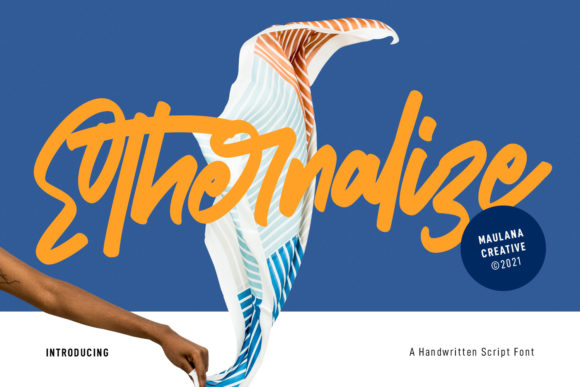
Ethernalize: A Handwritten Font for Social Media and Brand Campaigns
Ethernalize in a Product Launch Teaser for Instagram
As a social media strategist, I recently worked on a product launch campaign for a wellness brand. The goal was to tease a new line of natural skincare with a minimalist, elegant aesthetic. I needed a font that could carry the emotional tone of the brand while standing out in a fast-scrolling feed. Ethernalize, a script handwritten font, became the centerpiece of the teaser graphic. Its flowing, personal strokes gave the design a human touch, and the letterforms felt both modern and timeless. I used it in a soft peach color over a muted beige background, and it immediately drew the eye without feeling overwhelming.
Why Ethernalize Works for YouTube Thumbnails and Reels Covers
When designing thumbnails for a series of short-form video content, visibility and clarity are critical. Ethernalize, as a display font, is best used in larger sizes—perfect for overlay text on video thumbnails. I tested it in a YouTube campaign for a digital course launch, using it for the headline “Limited Time Only” on a dark overlay. The contrast between the white text and dark background made the message pop, and the organic curves of the font softened the otherwise bold design. It’s not a font for long paragraphs, but as a title or callout, it elevates the visual tone significantly.
Font Pairing: Ethernalize with a Clean Sans Serif
To balance the expressive nature of Ethernalize, I paired it with a clean sans serif like Montserrat for subheadings and body text. This combination worked well in a Pinterest campaign promoting a self-care journaling challenge. The script font was used for the title “Start Your Journey,” while the sans serif handled the bullet points and instructions. This pairing reinforced a modern yet approachable brand voice, and the hierarchy helped guide the viewer’s eye naturally from top to bottom.
Ethernalize for Wedding Invitations and Elegant Branding
While working on a boutique brand’s rebranding effort, I explored using Ethernalize in a more formal context. The brand focused on luxury stationery and event design. I used the font in a mock-up for a wedding invitation suite, and it performed beautifully. The elegant strokes and refined ligatures gave the design a custom, hand-crafted feel. It also worked well for the brand’s logo, where a more personalized, intimate tone was needed. For this use case, I exported the font in OTF format to ensure print quality and clarity at larger sizes.
Readability Considerations for Mobile and Small Screens
One thing I learned quickly is that Ethernalize works best when given space. In mobile previews for an email campaign, I noticed that at smaller sizes, some of the connecting strokes became less distinct, especially on lower-resolution screens. I adjusted by increasing the font size and adding a subtle drop shadow to improve contrast. This made the text more legible without compromising the font’s personality. For dark backgrounds, I recommend using a bright white or light gold tone to keep the script readable and elegant.
When Ethernalize Isn’t the Right Fit
Despite its many strengths, Ethernalize isn’t a one-size-fits-all solution. I tried using it in a dense Facebook ad layout with multiple lines of copy and found it difficult to maintain readability. The font’s flowing style is better suited for short bursts of text—like headlines, quotes, or key messages—rather than long-form content. It also doesn’t fit formal or technical contexts. I wouldn’t recommend it for corporate reports, legal disclaimers, or B2B landing pages where clarity and neutrality are key.
Checking Font Features Before Final Use
Before finalizing Ethernalize in any campaign, I always check the included styles, ligatures, and character sets. The font comes with a range of alternates that allow for customization, which is especially useful for logo design or branded templates. I also verified that it supports multilingual characters and includes commercial licensing, which is essential when designing assets for clients or digital products. The file formats available (OTF, TTF) ensure compatibility across design tools like Canva, Photoshop, and Illustrator.